
This is a long overdue post. My first few were really dedicated to establishing my “why,” and a touch of the “what,” but only tangentially referenced the “where.” If it’s not already obvious – I am a long form storyteller. You must understand where we started, to understand where we are going – and that often requires taking a few steps backwards to lay the groundwork.
If I had been really organized – and not running around like a chicken with my head cut off – I would have gotten those first few posts out of the way before I even left the states, so I could have gotten right into the good stuff upon landing.
In the nascent stages of planning, I didn’t have a solid “where” in mind right away; I just knew “not here.” I don’t have a traditional Bucket List – though I certainly have a number of experiences I’d love to plan a trip around, for example, a sunrise hot air balloon ride in Cappadocia, Turkey and the Masked Ball at Versailles in France.
There are very few places or experiences I would say “no” to (except for things that push my body to its limits, like Everest Base camp or bungee jumping off of the world’s tallest bridge). My trips are usually dictated by a combination of timing, cheap flights, and the preferences of any travel partners.
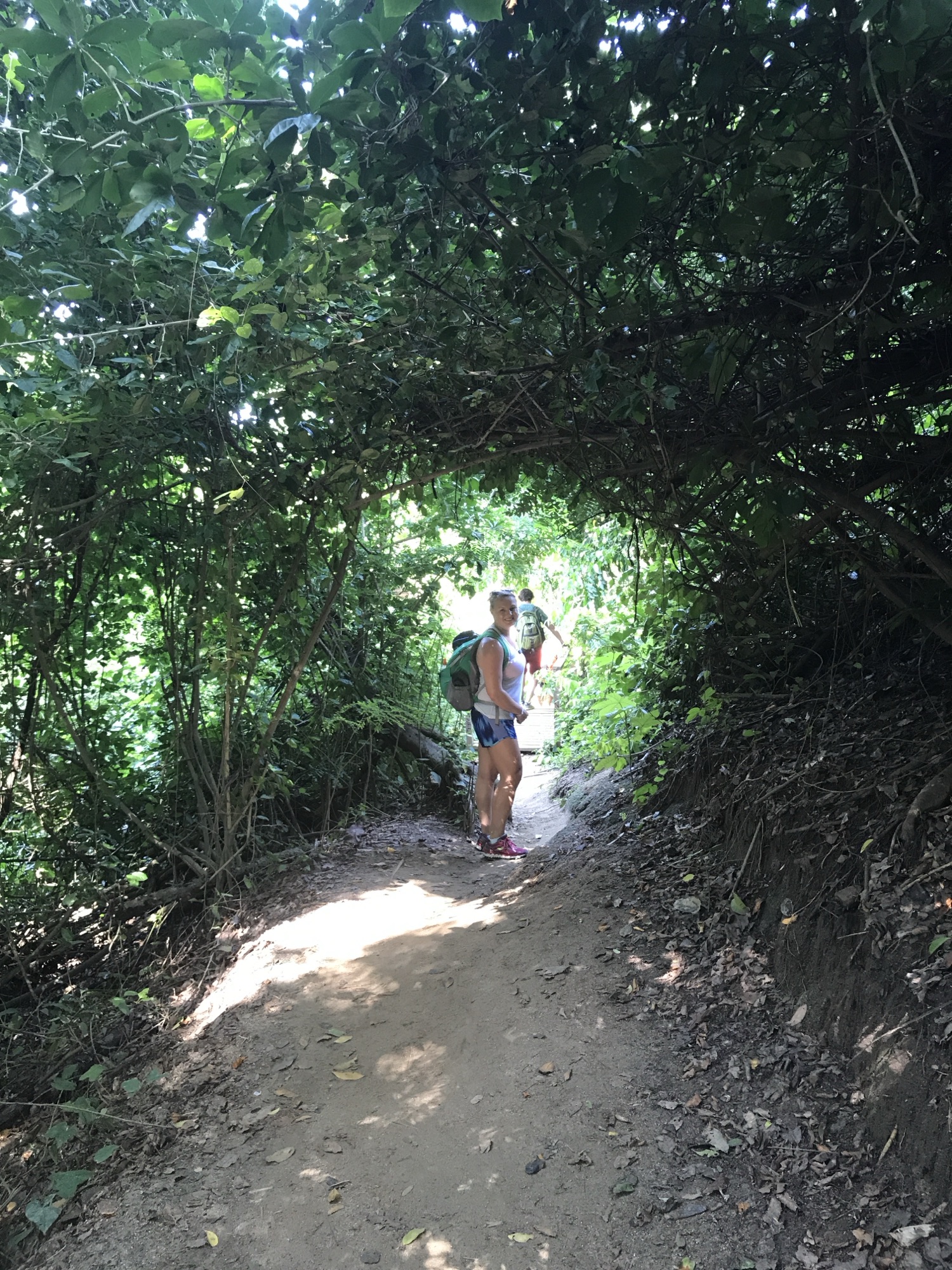
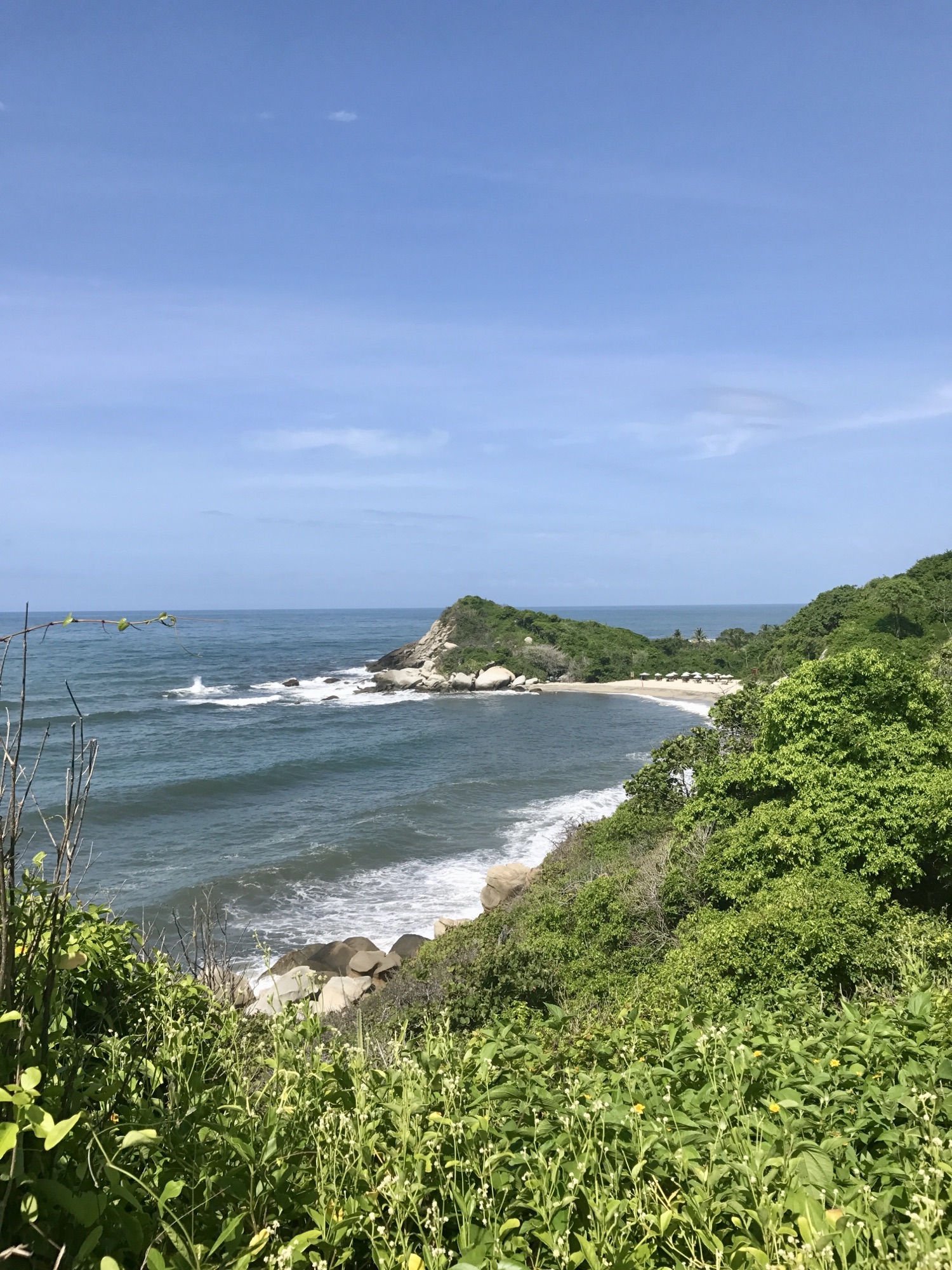
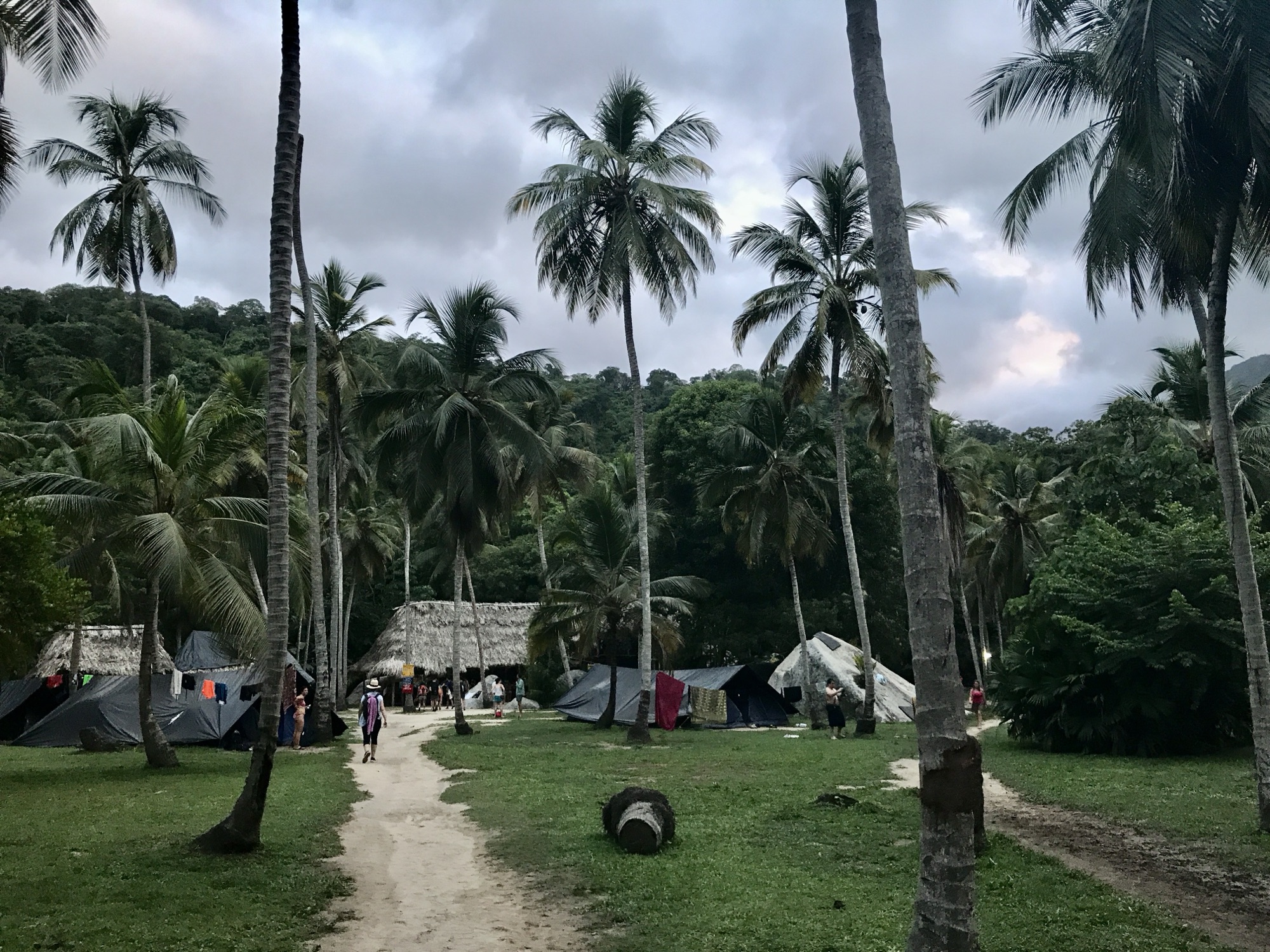
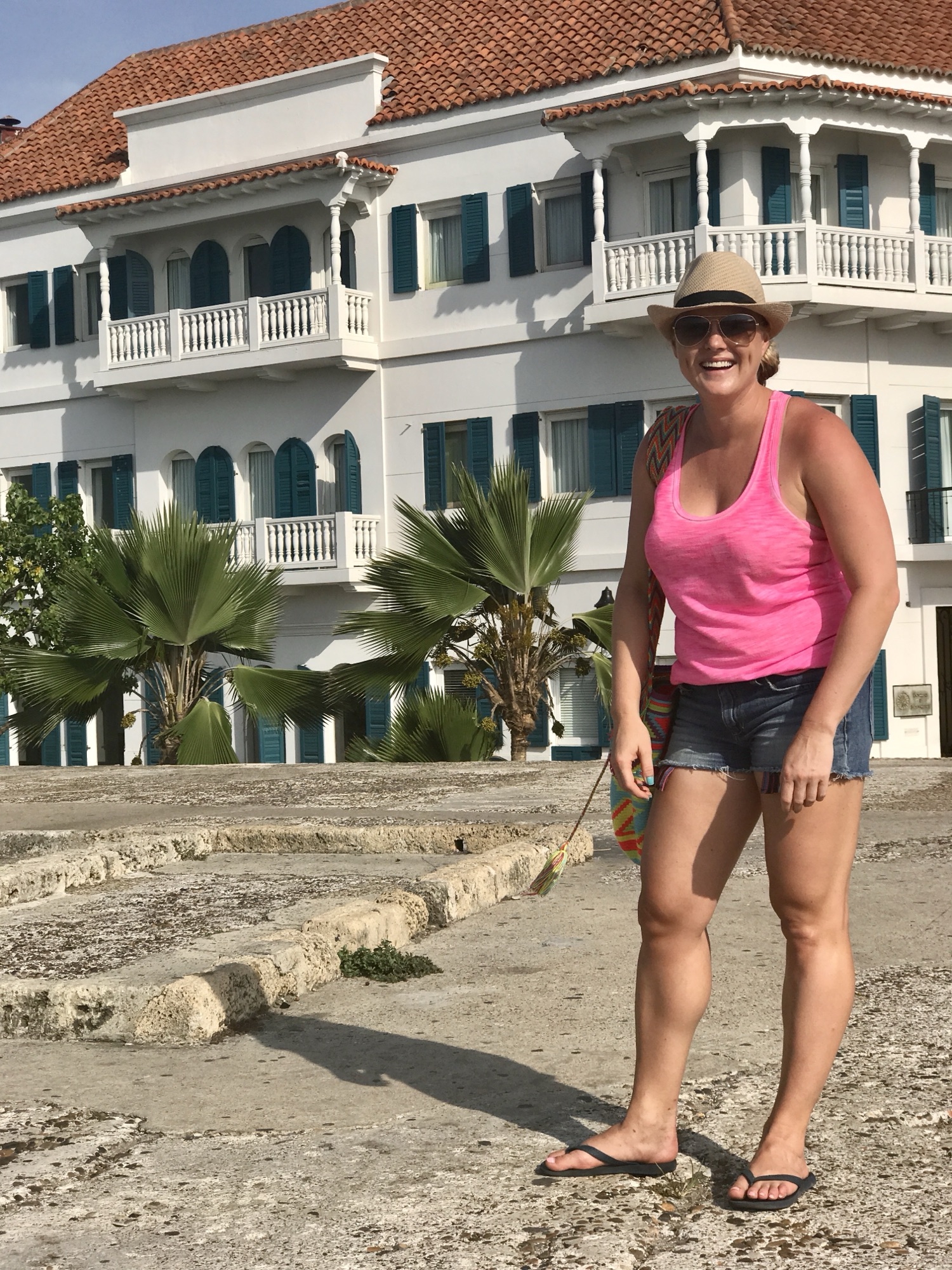
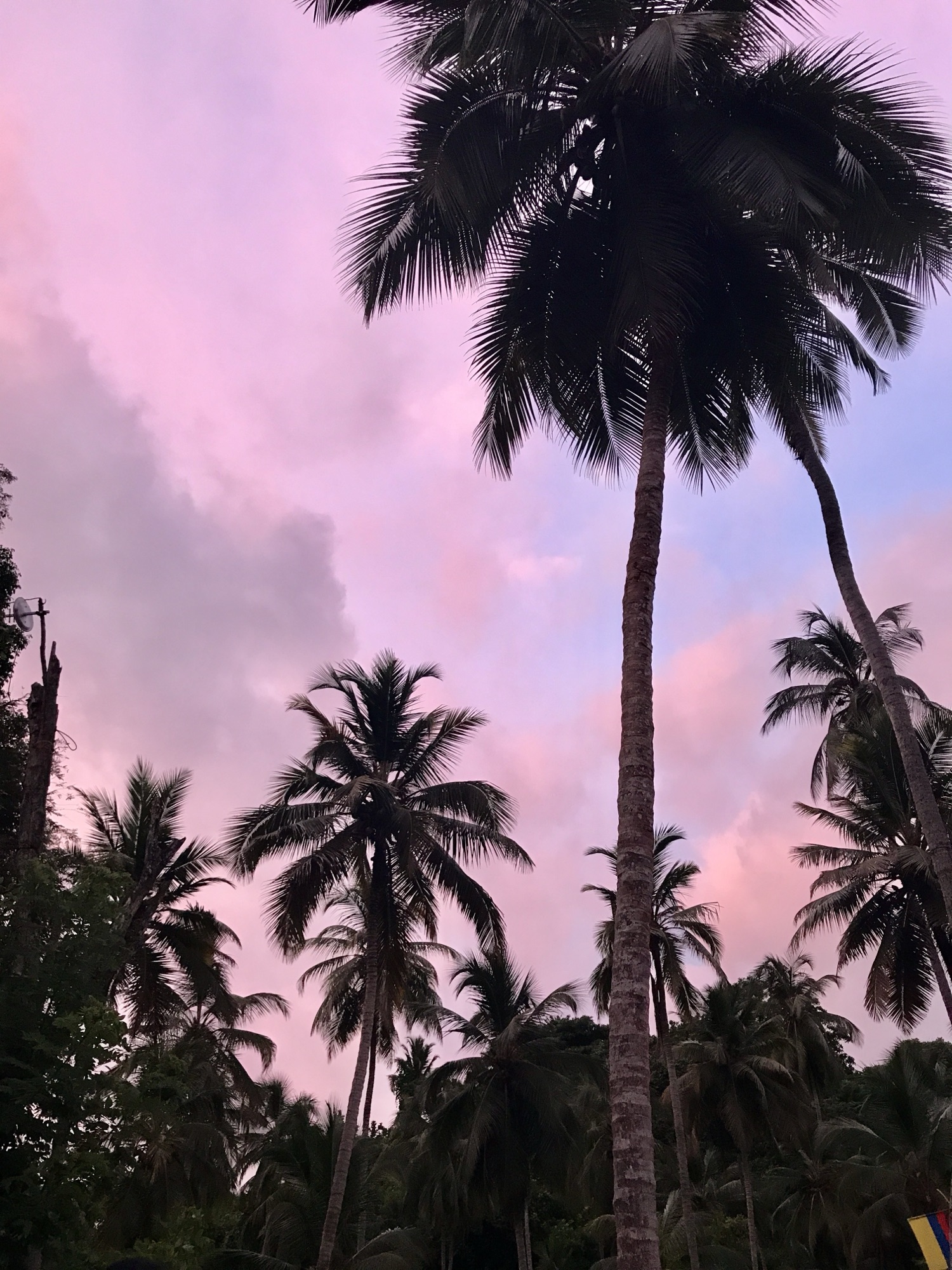
For example, in 2017 a couple of friends of mine were backpacking their way through South America and they would be in Cartagena, Colombia during the window I could take vacation, so that’s where I went. We had an amazing time in one of the National Parks on the north coast, where you had to hike 2+ hours into the forest to reach the beach. We spent the night in a camp in the forest, where I slept in a hammock alongside 50 other travelers in a covered picnic-shelter type structure. It’s an excellent story to tell in hindsight, but it was quite stifling and the mosquitos were out for blood, and a hammock isn’t exactly the most comfortable bed.
Thanks for the excuse to go back and look at photos from this very memorable trip!


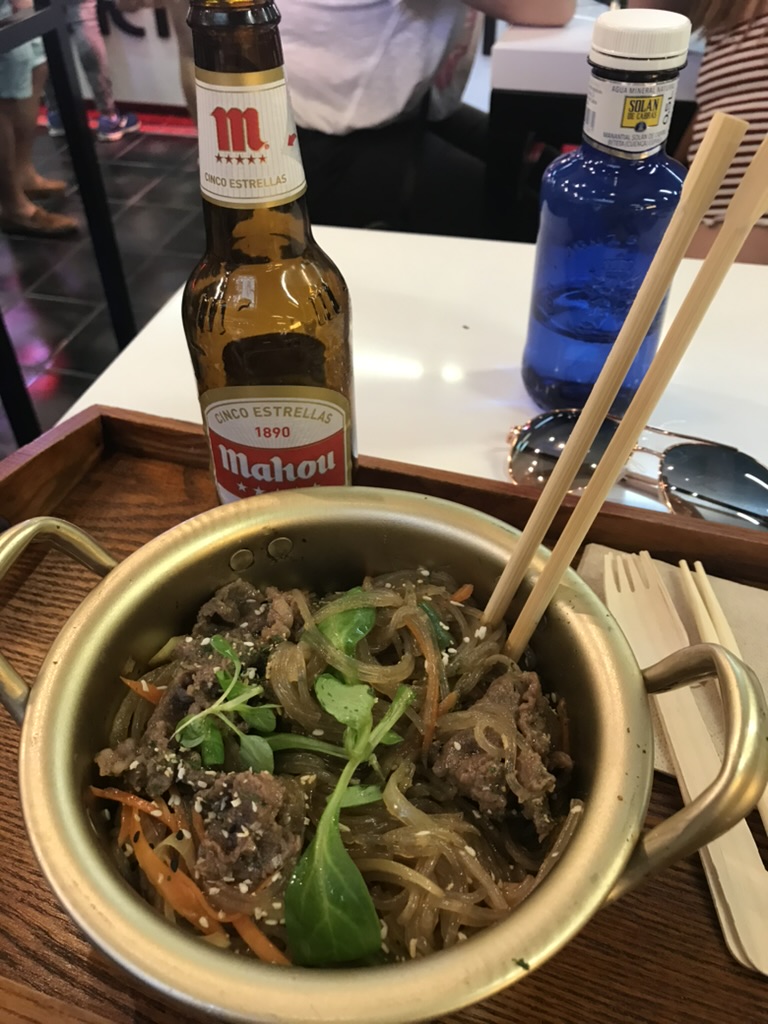
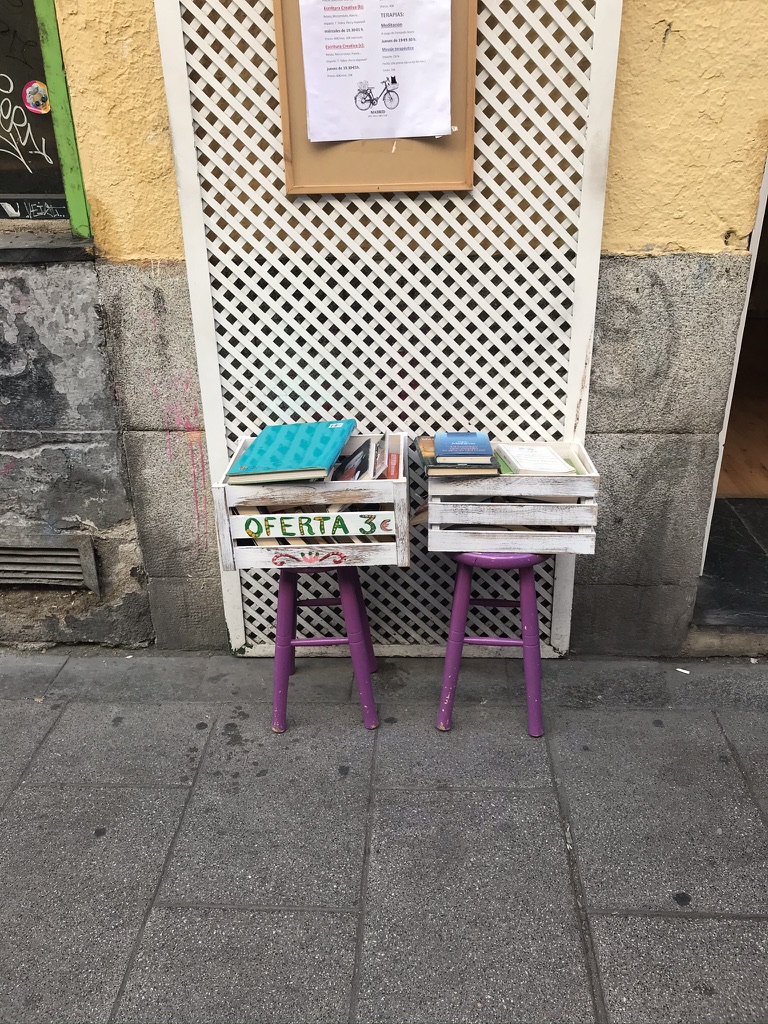
Since traveling with my sister to Santorini, Greece for my 30th birthday, I have traveled for my birthday week every year. It’s early October, so generally great weather wherever you’re looking, and as we overworked, undervacationed capitalist Americans know, having a solid, immovable “excuse” for a trip makes you feel less guilty for taking it off. For my 35th, I ended up getting $350 round trip flights to Madrid, which also ended up being a delightful time.



But I digress.
I naturally considered Southeast Asia briefly, when thinking about where I could make my savings stretch furthest. I’ve also never been there, and always had a vague vision of taking a trip to Vietnam and Cambodia for my 40th. But there was a bug in my brain (another one of these messages from the universe I keep referencing) that kept whispering “the Balkans” – and more specifically Slovenia. I truly don’t have any good reason for why that’s the area that was coming to mind, other than I’ve been to much of Western Europe (and my money wouldn’t go much further than it would at home) and I’ve wanted to visit the more “off the beaten path” Eastern + Central European countries that have the same long history, architecture, old buildings, cobblestone street and hole in the wall pubs that I love about Europe, but for a fraction of the cost and with considerably less American accents. I also know way less about the history of this region, and you know I love a good war museum.
There were some other random things about Slovenia I had seen on TikTok (Lake Bled was my North Star for much of the last few months), but there was no logical reason why that was the country that had stuck in my brain. As this blog clearly states – I was going on vibes. And vibes are hard to explain. In fact, it’s best not to try to understand a vibe – just go with it.
[I cannot emphasize enough how LITTLE I thought this part of the trip through. Of course I did a zillion things on the US side to prepare, but aside from booking a round trip flight and my first month’s accommodation, I am definitely winging it. I have no idea where I’m going next. Nothing is booked.]
So while Slovenia was the country I named as I started telling people about my plans, other than setting up a flight alert for Ljubljana I didn’t spend much time thinking about the logistics of the trip right away. I couldn’t let the daydreaming about the trip itself get in the way of all of the things that needed to happen in the US to get me there (and per my last aside, there were a LOT of things).
Once I had a better sense of my dates of travel, I started to look around at housing options. I wanted to spend at least my first month in one place, which means a hotel and hostel weren’t going to be an economical, or comfortable option in the long term. There were surprisingly few options in Slovenia. Those that did exist were more than I had been hoping to spend and weren’t giving me the kind of vista I imagined waking up to when I looked at pictures of Lake Bled… the vibes weren’t there.
Then, a friend told me about Sabbatical Homes, which was a game changer.
I inquired at several apartments/homes in the region, but when I came across on the listing for “an attic with a view” in Kolocep, Croatia, with the lead image being the magnificent sunset I now see every evening, it took my breath away. Nevermind that Croatia wasn’t one of the countries that I had included in my list of places I might bop around to. Or that it’s not exactly “off the beaten path” and is in fact one in the midst of an incredible tourism boom. Or – not traditionally being a beach gal – that I hadn’t really been envisioning a setting with so much water (Lake Bled felt more spiritual and naturey to me than vacationy). BUT. You deny a vibe at your own risk
I had a zoom call with Natalia a few days later where we verified that we were both real people and not serial killers and in true trust-the-universe-and-your-gut fashion, I asked maybe 3 questions, two of which being “when is the apartment available, and how long can I stay?”
She said “Hannah, I need you to understand, this is not a lively place. There will be no bars or restaurants open until May, and even then, there are only 2. You can’t get a fancy meal. This is a residential island. It’s a very quiet lifestyle, especially in the off season.”
I said: “Natalia, when can I come?”
I sent the deposit that day.
Kolocep, Croatia
There I go again, making you read 1,000 words (actually, the WordPress count says 950) before getting to the topic of this post. Rather than create my own summary, I will copy and paste directly from Natalia’s listing and ask what you would have done:
The attic loft offers a spectacular view of the Adriatic sea and the faraway Dinaric mountains. It is situated on the island of Kolocep, the southernmost inhabited island in the Adriatic sea. It has 150 inhabitants, subtropical vegetation, a little shop, a cafe’, a post office, a primary school with four pupils, one resident doctor, one professional fisherman, and no cars. It was originally a Greek settlement but its original name “Kalamota” is probably Latin. It has secret bays, lovely walks, a clear sea, fragrant pine forests and rural charm. Ours is an authentic Dalmatian captain’s house close to the sea, near to the ferry but surrounded by gardens and olive groves. We live on the lower floors but in the attic, we have recently built a loft with a sea view, underfloor heating, AC and a huge terrace. The attic has a separate entrance and offers peace and privacy. It has a full kitchen with hob, oven, dishwasher and all the pots and pans you need to cook and bake whatever takes your fancy. The ferry takes you to Dubrovnik in 30 minutes to enjoy the old city or shop the market. We will supply you with vegetables and fruit from our garden for nourishment.
When you think of Croatian islands, you’re probably thinking of the bigger ones that all the yachts bop around to during Yacht Week and on reality TV shows like Below Deck – and honestly, so was I. I knew this would not be that, but wasn’t entirely sure what to expect.
If I have done my calculations right, the island is 1 sq mile which didn’t feel that big – though that might be more of a testament to my lack of geometry skills. When I arrived I felt overwhelmed with the size; although I quickly realized it just looks bigger – it’s an incredibly “approachable” island. There are two villages – the house is in the larger of the two, about a 5 minute walk from the ferry pier, and with a direct view of the bay – as is clear in many of my pictures.
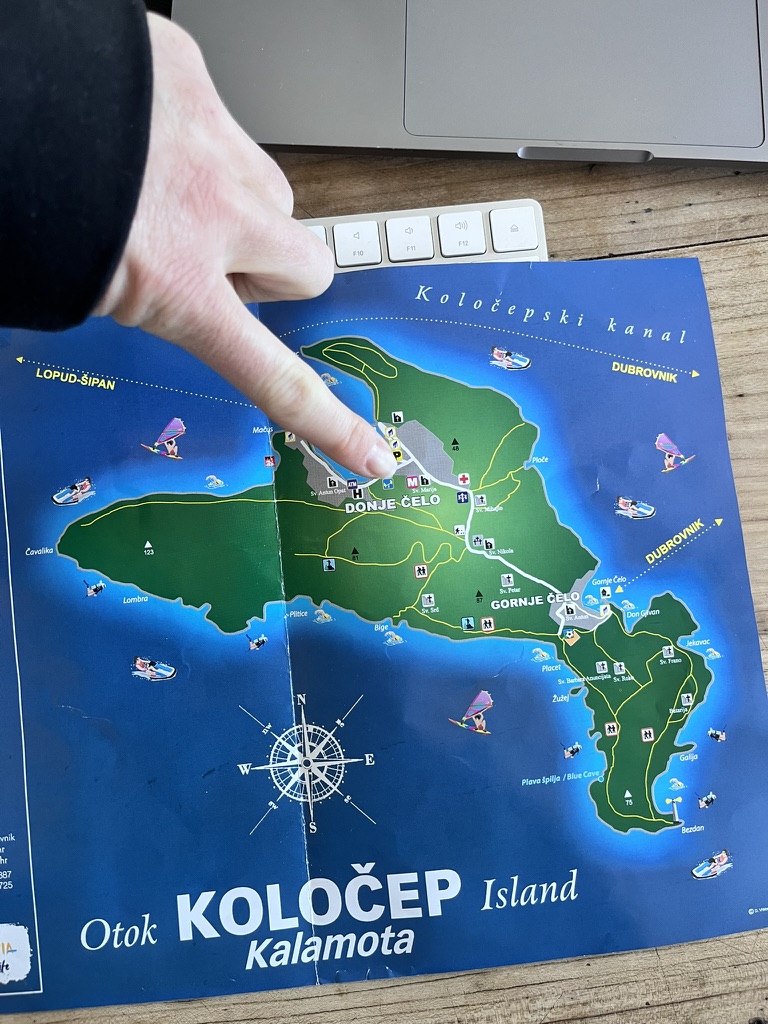
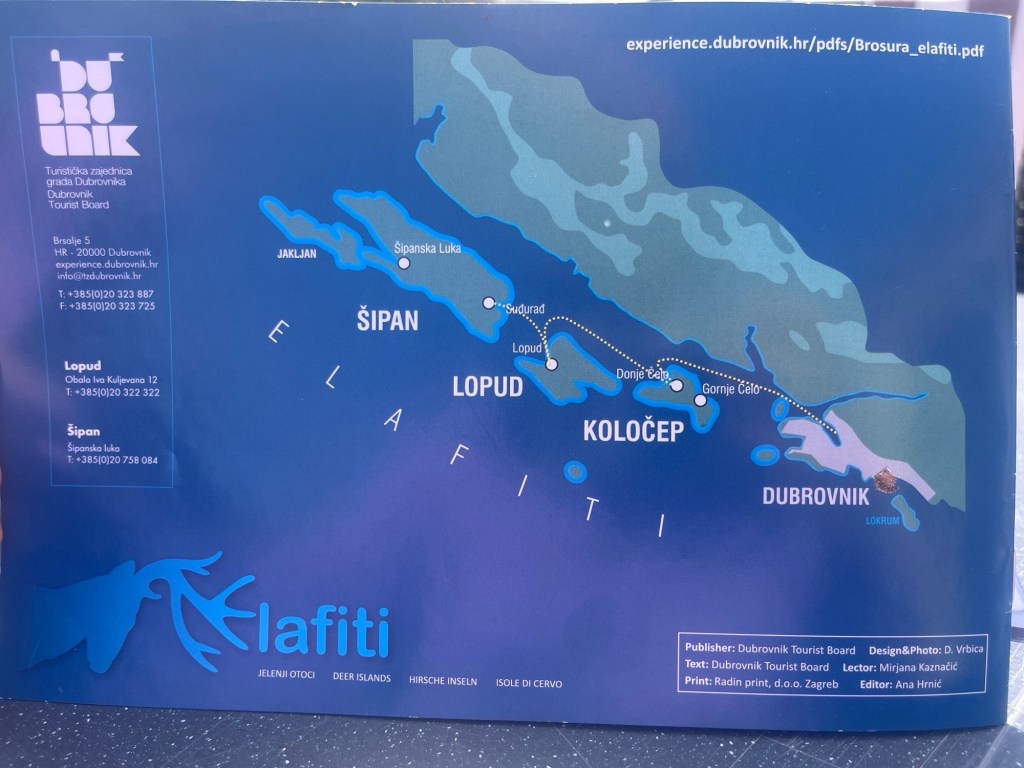
Kolocep is part of an archipelago of thirteen large and small islands known as the Elaphiti Islands (not pronounced like elephant!) that protect the Dubrovnik coast from offshore waves. According to the above brochure, these were the islands of Dubrovnik aristocrats, sailors and captains, fishermen, coral divers and farmers.
The organization is remarkable – well maintained, paved pathways with street lights connect the two villages (the thick white lines on the map). There are several directional signs at key intersections and while it tends to be a given in 2025 (but is not true of every island, I’ve learned) internet and electricity are strong and reliable.
My first day of exploring, I knew I was in heaven..the twists and turns and dead ends felt endless. I found myself in a pine forest seconds before turning a corner and gazing in awe at an endless blue sea that is just bragging about how many shades of blue Crayola crayons it contains. I wandered off the paved path in a couple places, terrified I was going to get chased off by a property owner shaking a newspaper, but I could count the number of people I saw during my explorations on one hand.
But it has been my walks with Natalia that opened up this island in ways I’m not so sure I would have discovered on my own.
Trespassing, what’s that?
One of the first lessons I learned is that the concept of trespassing is distinctly American. Or, it is not a Croatian concept. Or, at the very least, it is not a Kolocep-ian concept. Paths weave alongside and behind homes, and a few houses have a gate at their driveway (which Natalia sees as an obstacle to circumvent, not a reason to turn around) – but it is those paths that criss cross all over the island, shortening the distance between points and providing access to seemingly impossible-to-reach and unnaturally private breathtaking viewpoints.
If I had to sum up the walker’s mentality on Kolocep:
If you think you’ve hit a dead end – you haven’t.
If you think you’re walking somewhere you shouldn’t be – you’re not.
If you think you’re walking on something that isn’t actually a path – you’re wrong.
I might add to that a 4th point, one which has kept me humble:
If you think you’ve stumbled upon a secret spot that has heretofore been undiscovered – you most certainly have not, you self-important American tourist.
Anything is a path if you decide it is. The question is just how many sticks and weeds and hills you’re willing to walk through/on/over to get to the other side.
Additionally, there is a law that is a holdover from the Socialist era, which decrees that the 5 meters inland from the sea are government owned, and therefore public property. Meaning, someone cannot build a home with a private dock and beach access and legally prevent people from using it. A lot of the places you think you are trespassing are homes where wealthy developers have effectively privatized access to the water, but it’s perfectly legal for us to crawl across the rocks to reach the water. It becomes a bit of a “don’t ask, don’t tell” arrangement – they can’t do much about us on their property because technically they’re breaking the law.

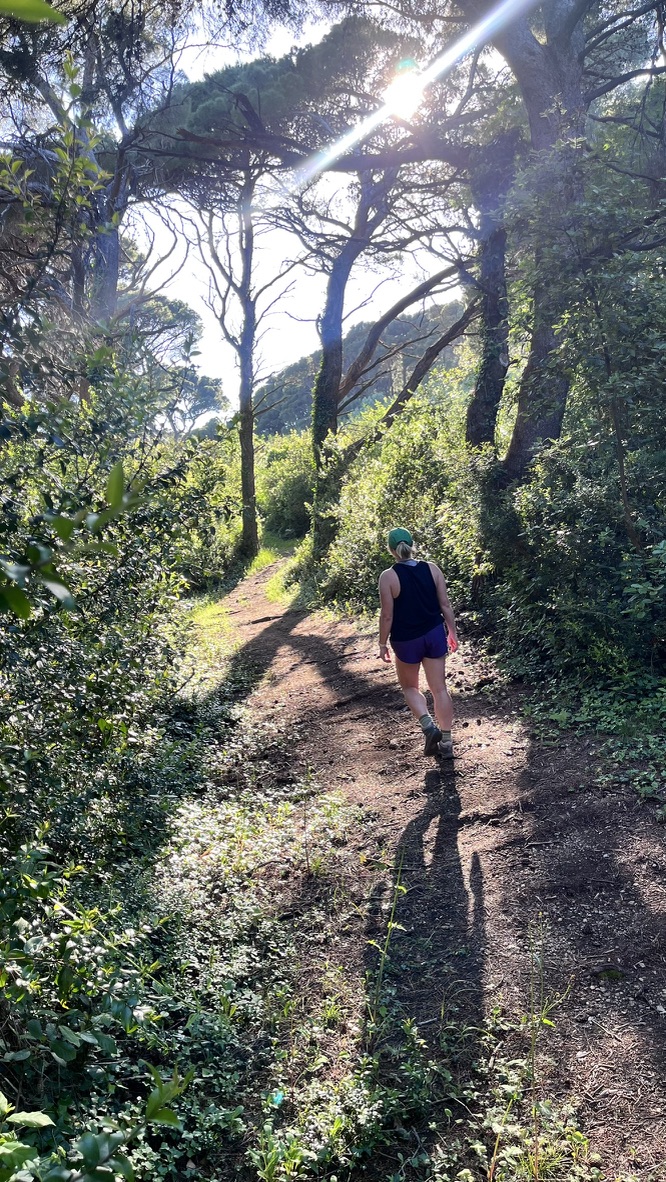


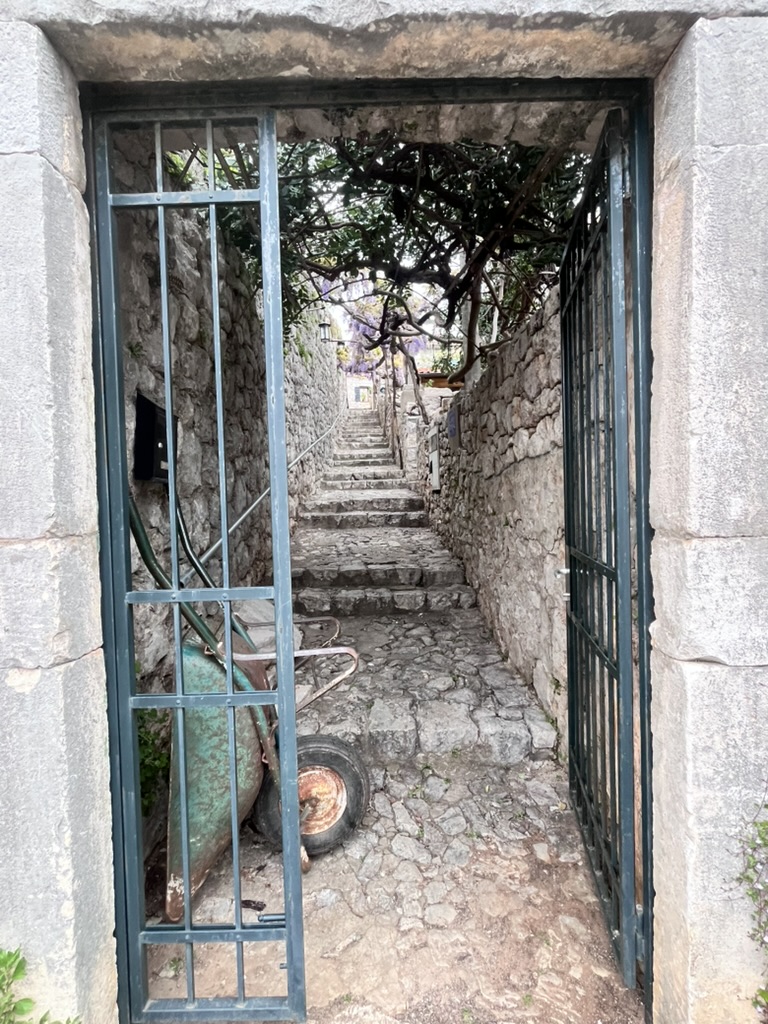
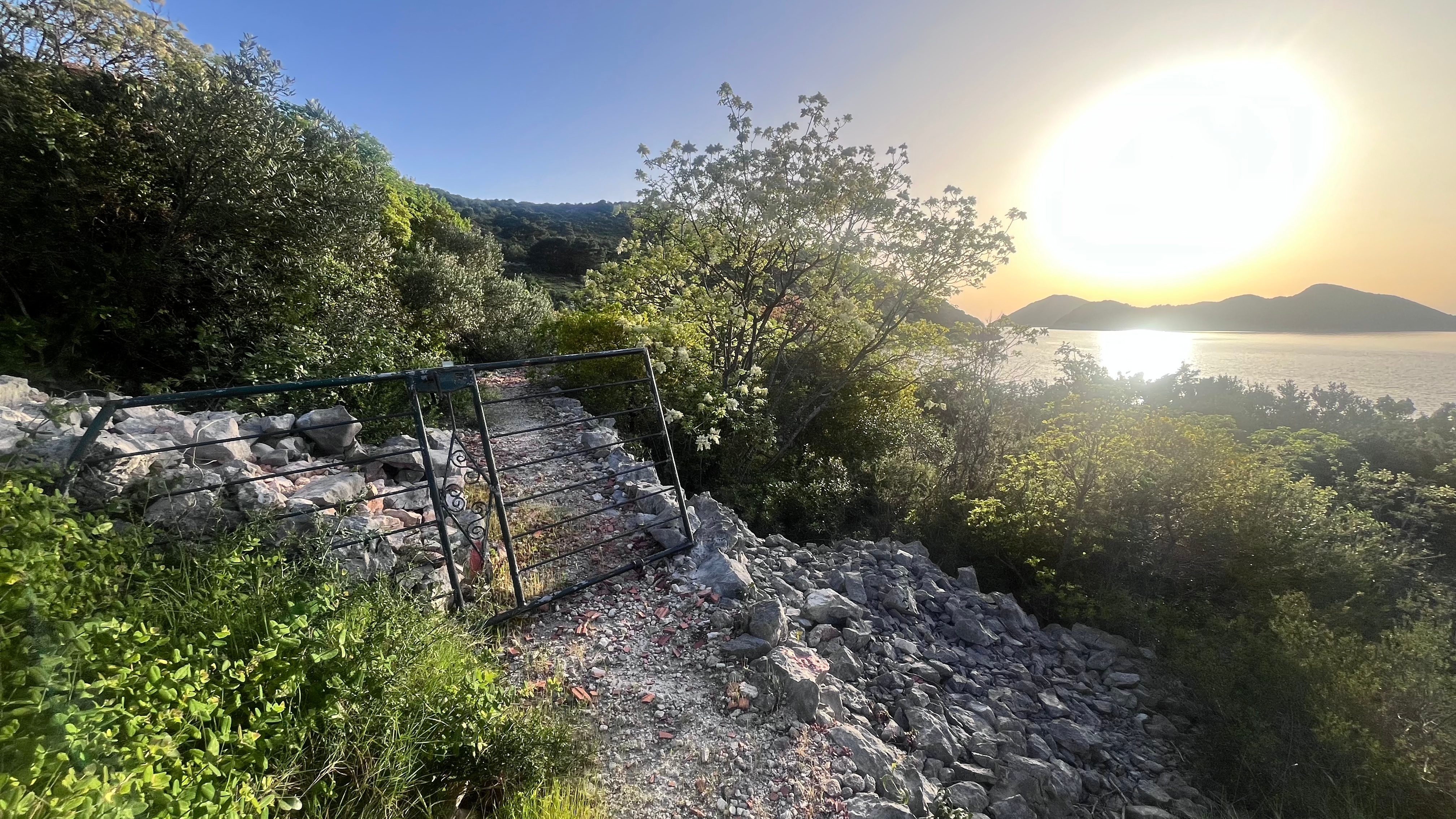

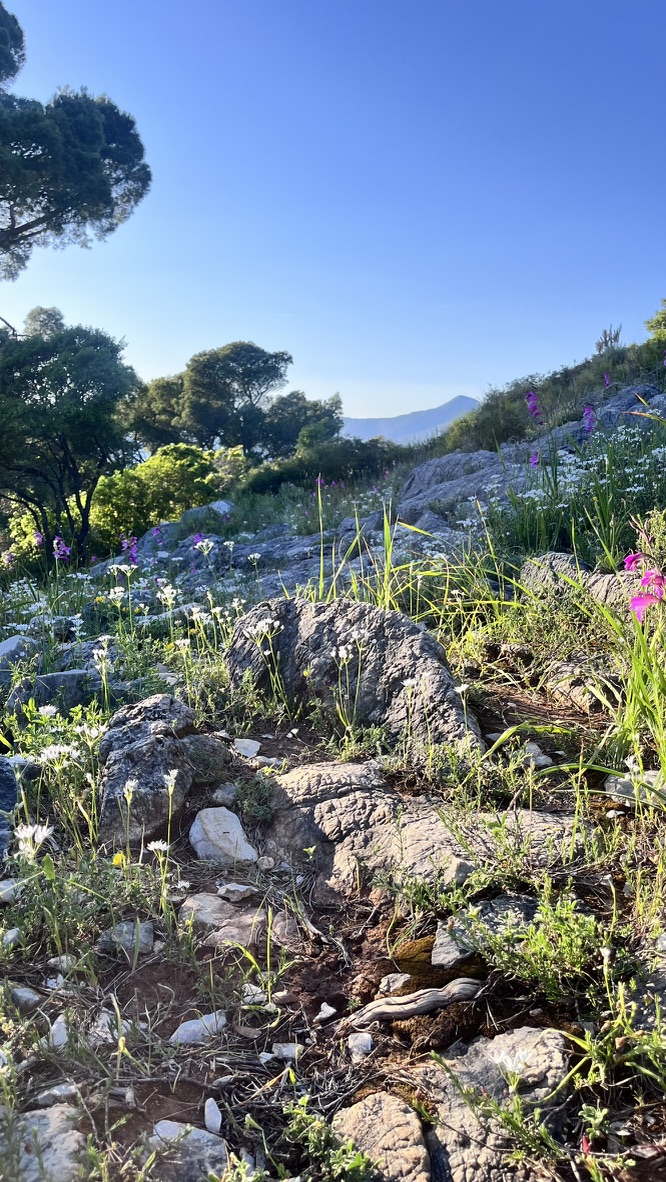
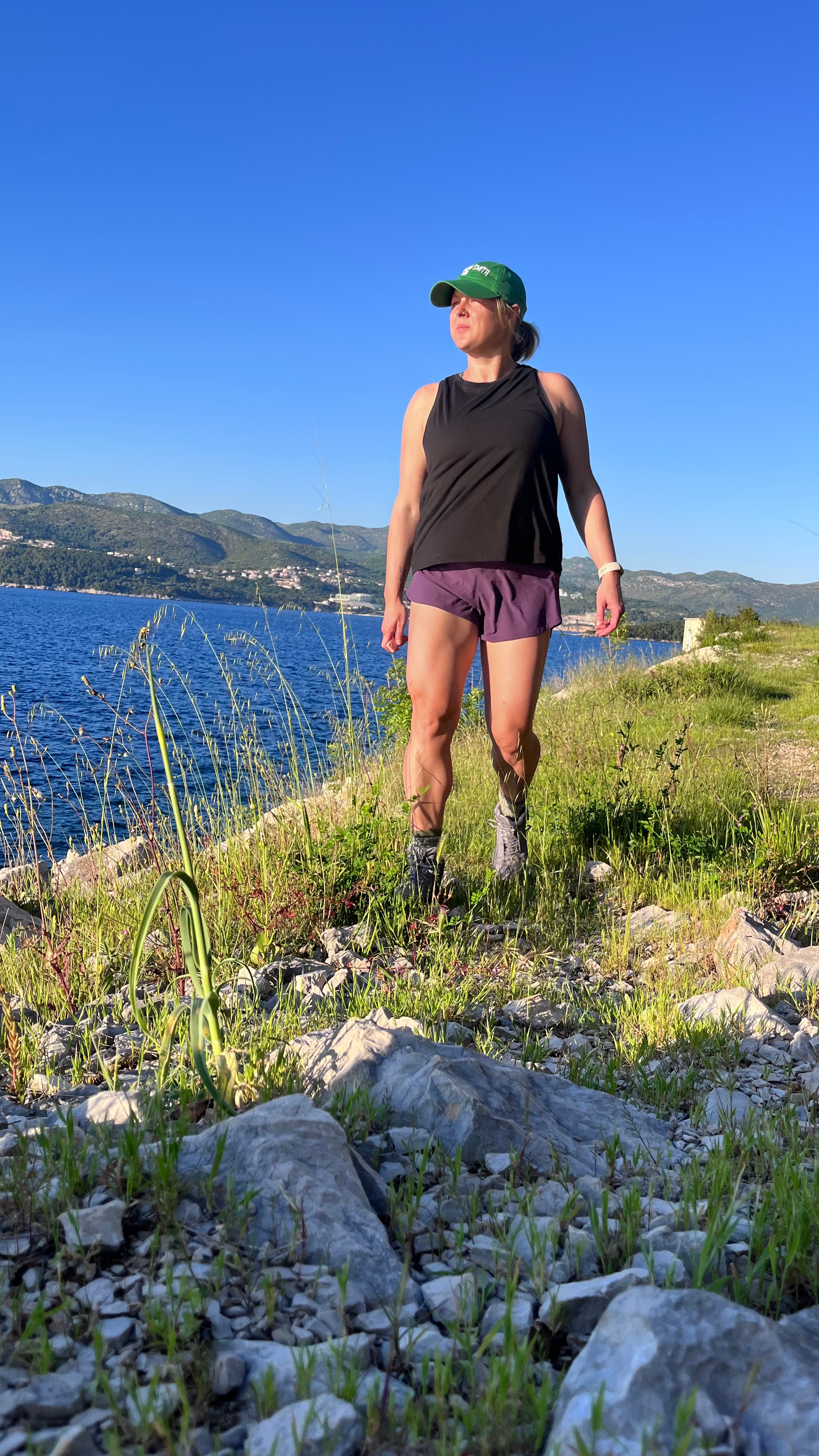
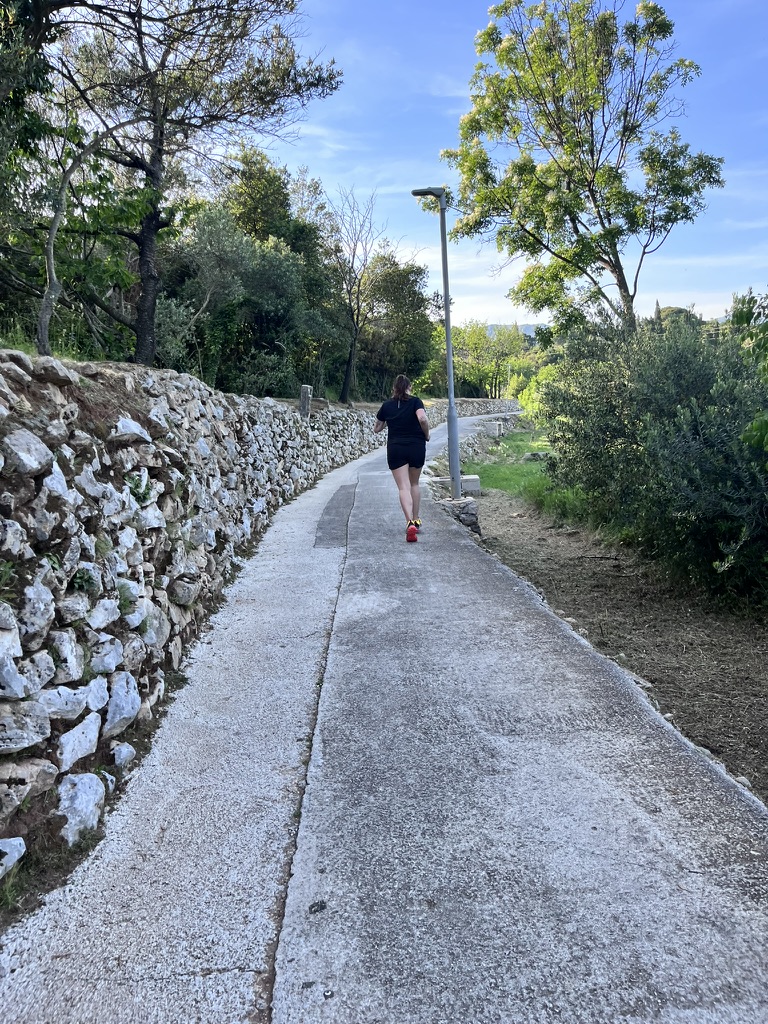
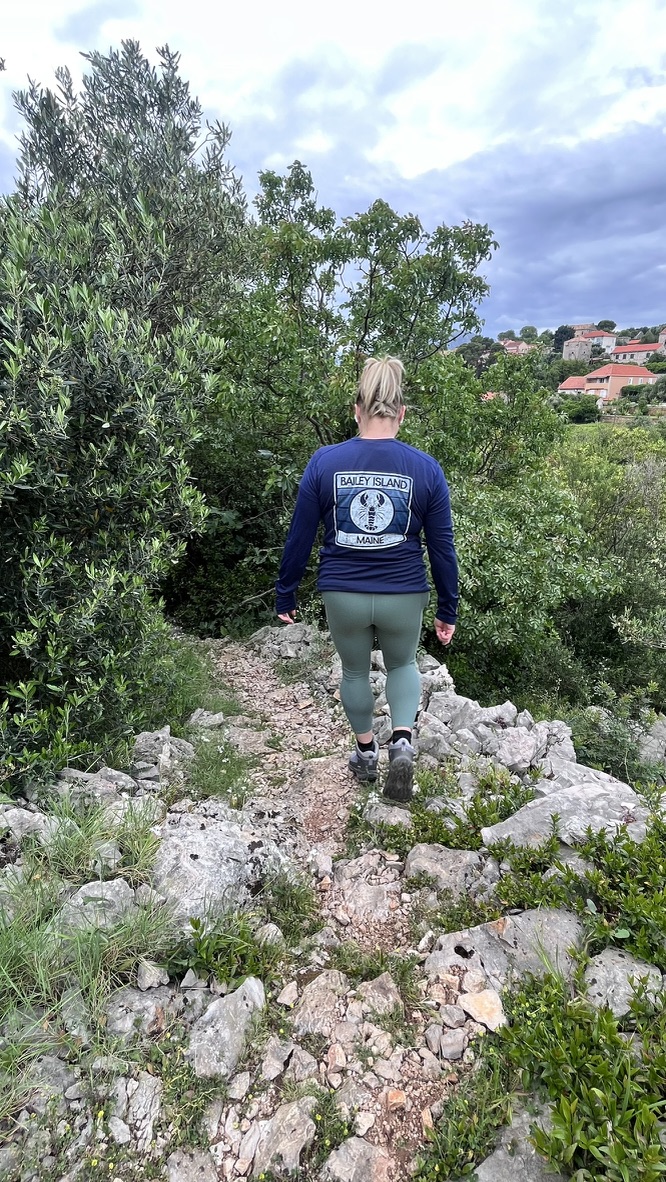
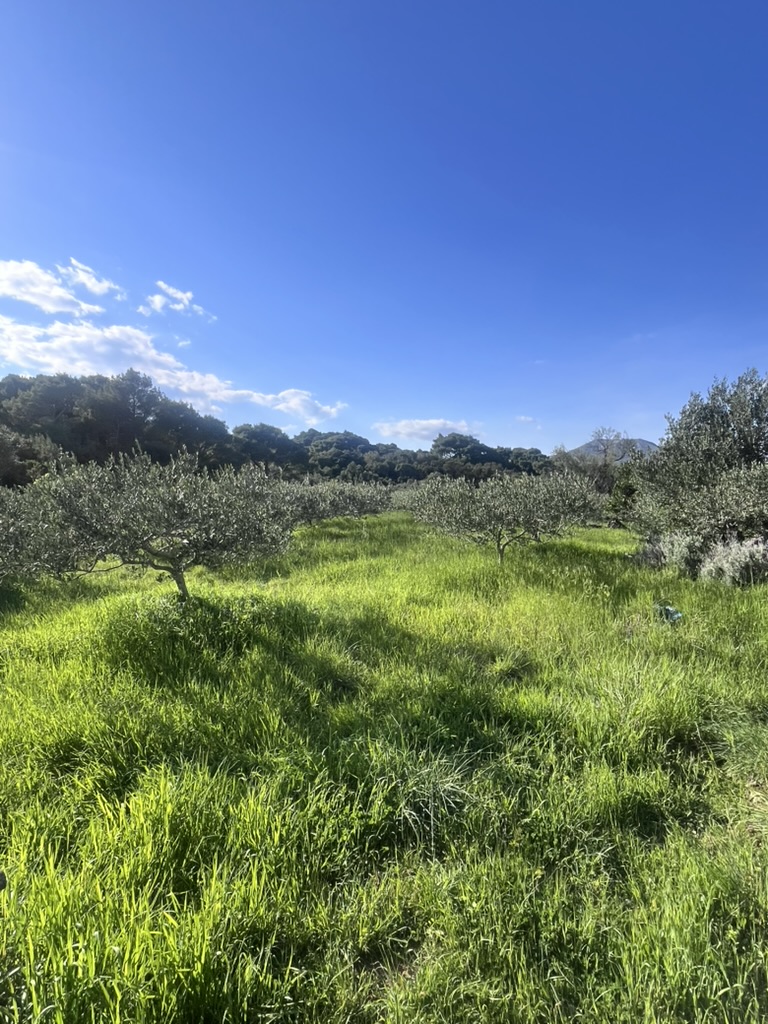
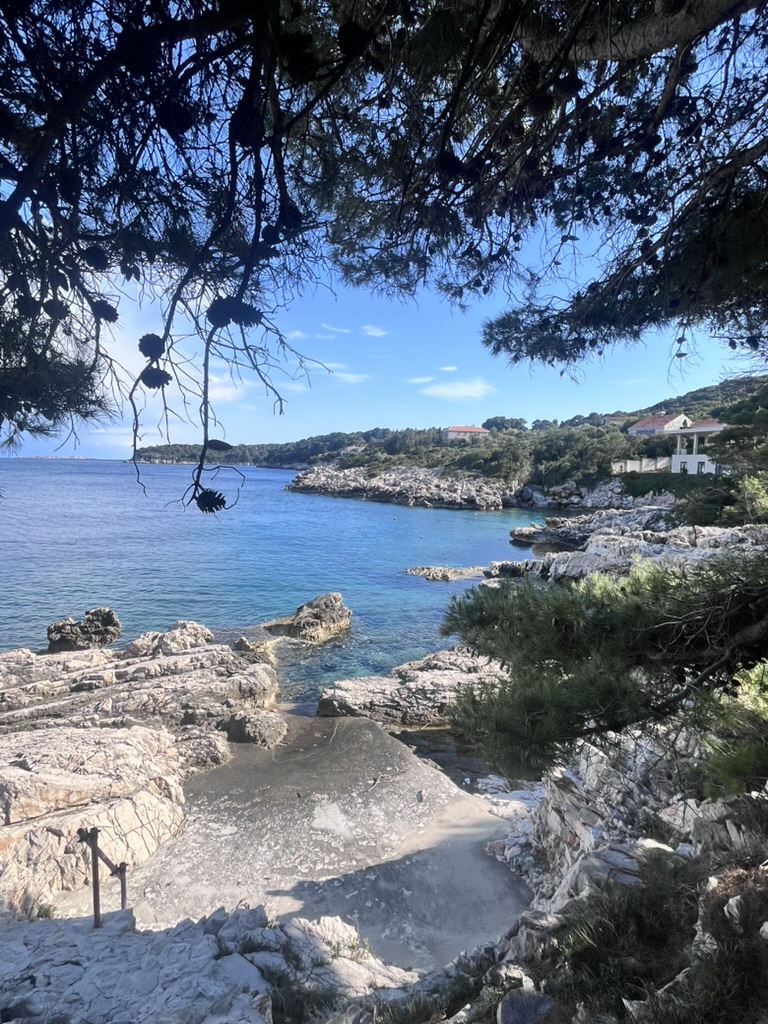


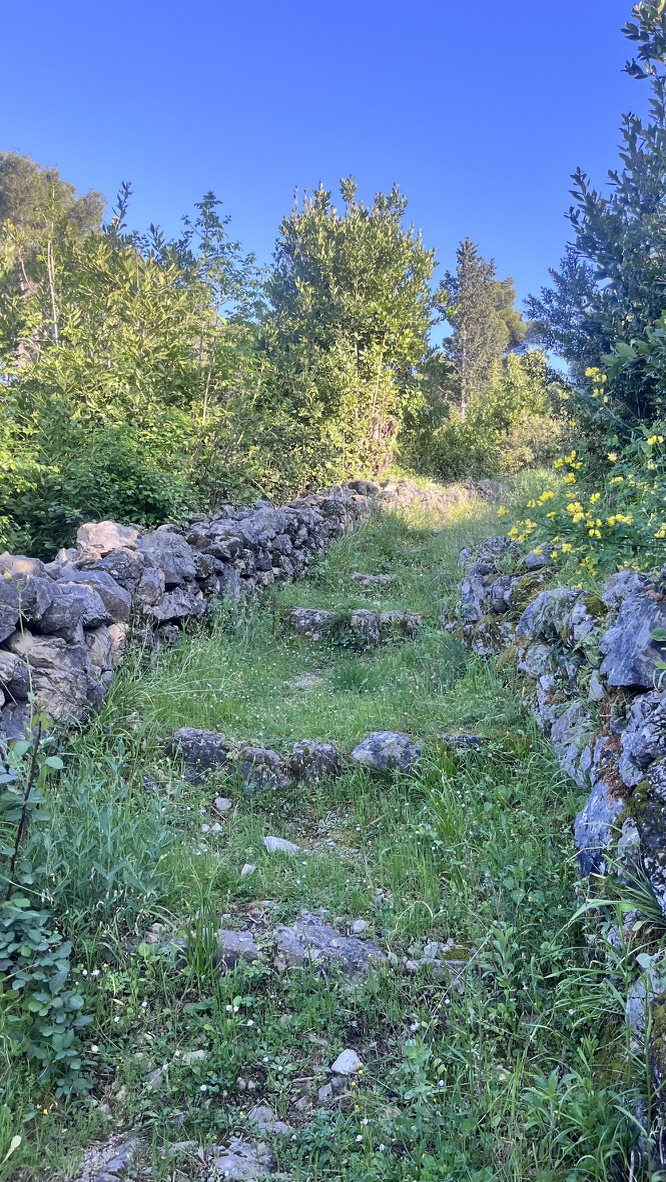
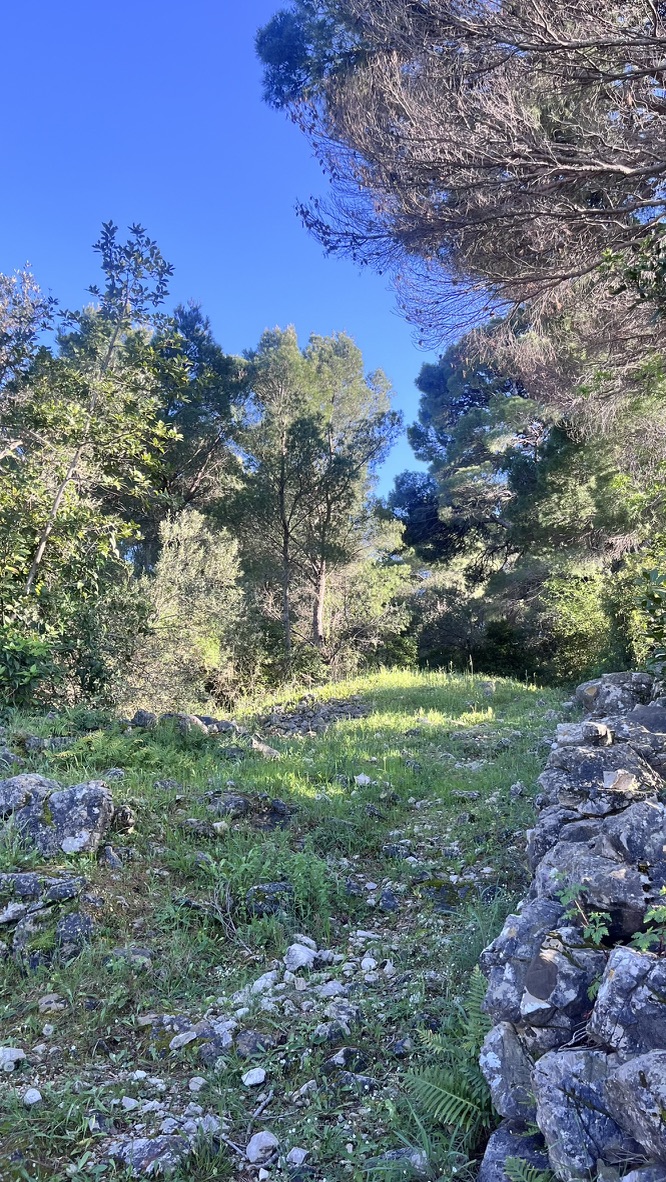
As you can see, the paths range from paved or otherwise well defined, to just a vague series of rocks that you follow and hope for the best. Other times, it’s just a field of grass (former orchards and groves) with shin high grasses you can wade through. The rocks here are incredibly jagged and dangerous; I appreciate the care that was given to laying a concrete pathway in some places, and stairs – or something resembling stairs – in particularly challenging terrain.
Note the iron door on its side that serves as a gate. Natalia always looks at me conspiratorially and says, “ready for a little breaking and entering?” before we step over/around such silly little attempts at keeping the curious out.
More houses than people
When I remarked that the number of homes on the island felt like it could accommodate significantly more people than the 150 residents mentioned, Natalia and her husband answered “there are more houses than people,” which didn’t immediately make sense, but quickly became clear.
Of course, there are a good number of holiday homes – places that are inhabited full- or part-time during the high season (~June-August). Some are rented out to tourists on Airbnb and similar sites, and others are owned by Croatian families who come out on the weekends or for the summer. I arrived at the beginning of April, where mornings and evenings were still quite chilly, and there is little interest in dipping a toe in the water for even the most intrepid swimmers.
There are also a lot of “ruins.” I say this not in the medieval sense of the word, but in the more “wow this house is really falling apart” sense. There are a number of reasons that homes are in a state of disrepair, abandoned, or sitting on the market – or otherwise unoccupied:
- Abandoned construction: There are a few homes whose construction was interrupted at some point for whatever reason. In some cases, owners have left Croatia altogether.
One such home is in one of the most gorgeous locations on the island, with cloisters, and gardens, and a terrace with a fountain. But it’s been abandoned for at least a decade; the roof has caved in, and you can peer into the ground floor rooms and see paintings still hung on the walls.. very creepy (but fwiw, I don’t get ghost vibes here). The family whose summer home it was made a ton of money in like, the aluminum industry, and moved to South America and just… never came back. The children are likely the new owners, but don’t live in Croatia anymore, and aren’t apparently bothered by the state of the home.

Some homes have been under renovation or construction for actual decades. People build as they have the money to. They often do it themselves. There are also legitimate logistical issues – there are no cars, just some golf cart sized-tractors, and many of the homes higher in the hills are accessible only by stairs, or overgrown wooded paths. Bringing both the materials and workers to build is incredibly labor intensive. There is a woman restoring a 14th Century chateau that we can see from the top of the hill for a decade (I would love to walk around that one, but it does truly have an OG stone wall twice as tall as me), bringing in supplies when she has the cash and labor.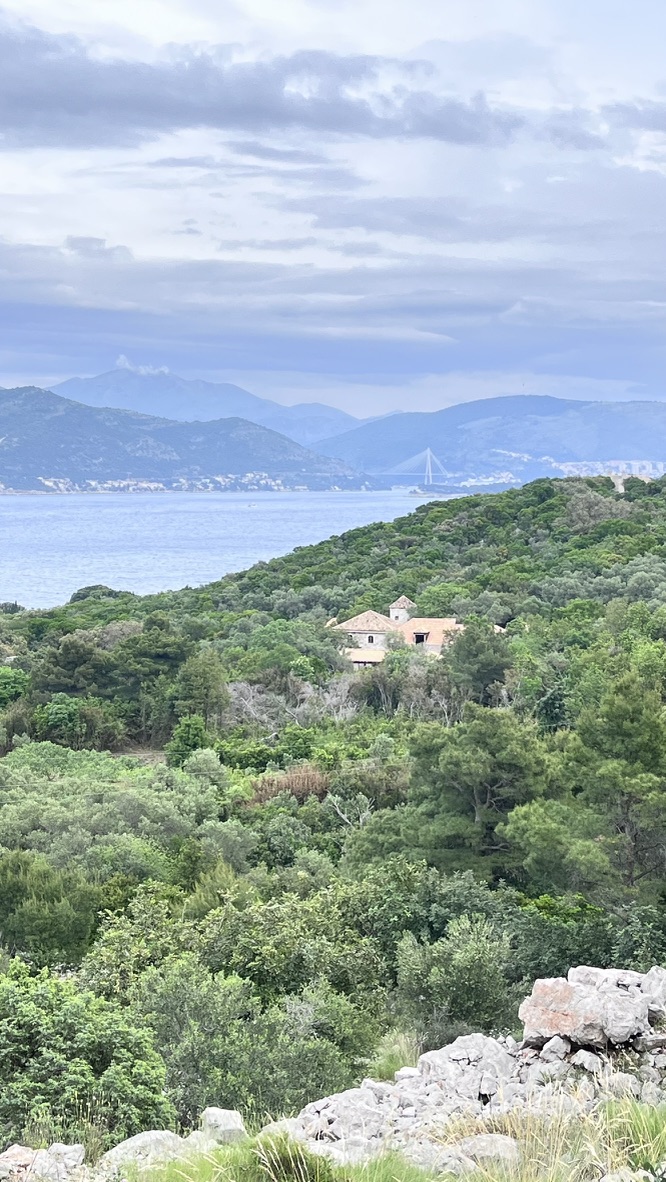
- Zoning issues: People purchased plots of land only to realize that it wasn’t zoned correctly (a truly global problem), and are now stuck with an undevelopable, or partially developed property. Oftentimes, it was a small group of friends or families that bought the land, with the intention of building holiday houses to share or to divide up the property, and there are of course now legal disputes about who owes who what, etc.
- Inheritance disputes: Perhaps the biggest source of unoccupied homes is those that have been inherited by multiple siblings that can’t agree what to do with it. I guess without other instructions in place, assets are automatically divided evenly among heirs, which means that if there is disagreement about what to do with a house or property… nothing gets done. Family feuds and grudges – another truly global problem.
Another dimension to this is that since it’s the property that’s inherited, the original house may be demolished, or additional properties built in the same small plot – the result is two or three completely architecturally incongruous homes clumped together on a tiny plot of land. - Unsold mansions: There are a few gooorgeous McMansions that stick out like a sore thumb architecturally (and try to privatize water access) that have been built in the last 5-10 years that appear to have never been sold or occupied. They are all technically listed as for sale on swanky “villas of Croatia” websites, but for prices that would be better suited to the “party” islands where the rich and famous park their yachts. So.. Oligarchs? Money laundering? Offshore asset hiding? We may never know.
- Unsold normie homes: There are at least a dozen houses that Natalia has pointed out to me that are also listed at unrealistically high prices, but within a more normal range (eg listed at 450,000 when it’s not worth more than 200,000). It sounds like people list them, waiting for that gullible tourist who thinks they’re getting a deal, to come in with an all-cash offer. These homes can sit on the market almost indefinitely, and it sounds like if you come in with just about any reasonable offer after it’s sat long enough, it is likely to be accepted.
Editing this to add more context that I learned yesterday from Natalia. Homes in Europe stay in families for generations. Particularly on this island, where some families can trace their roots back 1000 years and there is a finite amount of land (despite living here his whole life, Natalia’s husband Josko is considered a “newcomer,” because his great grandparents weren’t born on the island), one does not simply *sell the family home.* Families own their homes outright much more often than we do (Natalia is shocked that the majority of Americans not only owe the bank for their homes, but that so many of us don’t intend to stay in the house for the full 30 year term). Property taxes are also a brand new concept in Croatia, and I believe the amount recently instituted is 600 Euro a year, which people are up in arms about, but which doesn’t hold a candle to the rates in the US. So, someone can own property and not do anything with it and it doesn’t really cost them anything.
With that context, the homes for sale are few and far between, given that “we would sell our souls before we sold our homes.” Her words, not mine! (Of course I have been indulging in every millennial vacationer’s favorite pastime: browsing homes for sale and dreaming of “just doing it, just buying one”).
Current “ruins” aside, given the quite literally ancient history of this island, every step we take has been taken a million times before us.
There were times when the island was fully inhabited and if not quite self sustaining, at least produced much more (though it would have been a very difficult existence) – before people commuted to the mainland for work or left to go to university. There were livestock, olive groves, fish, and the soil is incredibly fertile, but it’s a short season. Of course as the generations went on, and the agricultural and industrial and digital revolutions came and went, it changed how people lived on the island. There is no longer any livestock, save a few chickens, and while you are apt to stumble on olive groves during your meanderings, they’re overgrown and no longer a source of income for the island. But the fruit trees have sustained, so grabbing an orange, lemon, grapefruit, kumkwat or fig on your walk is completely acceptable.
[Interestingly, the original name of the island “Kalamata” is likely not related to olives]
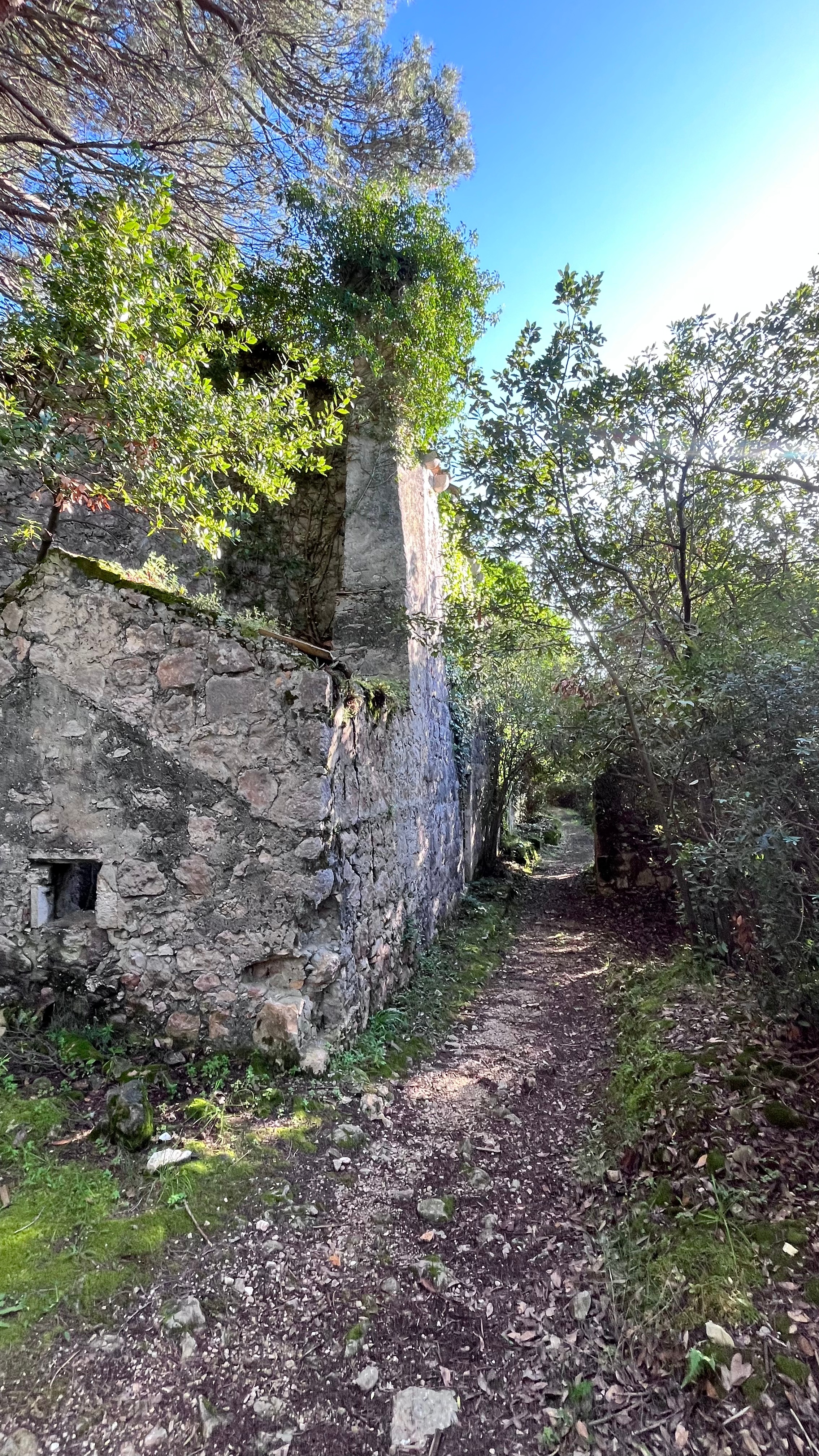
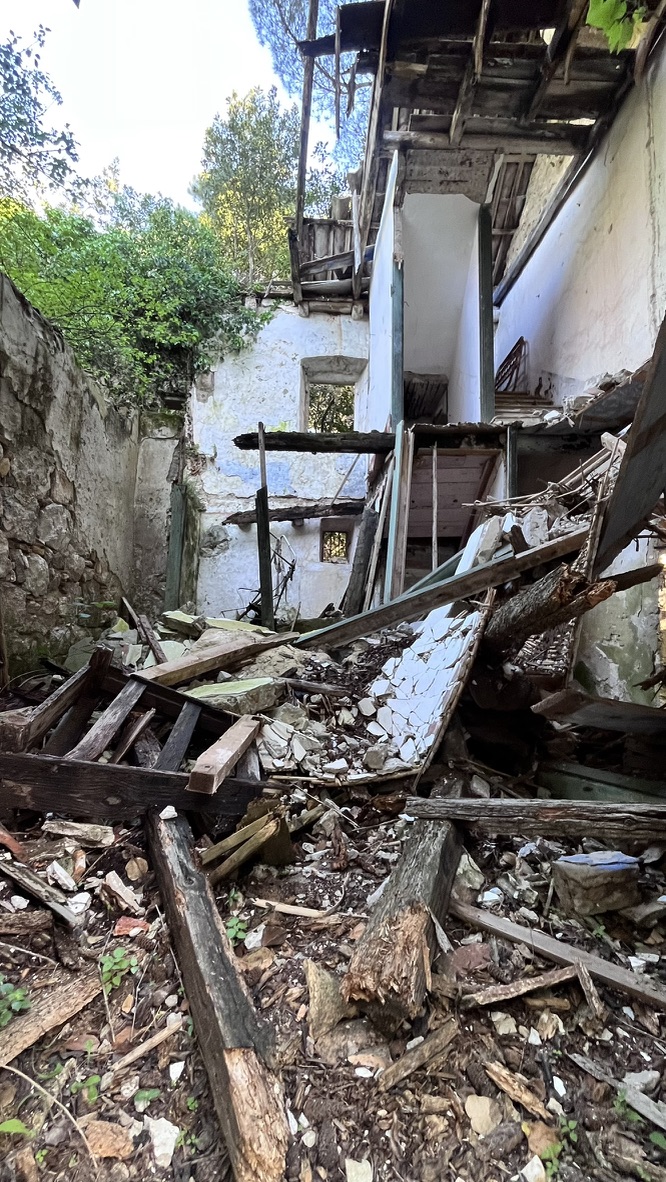

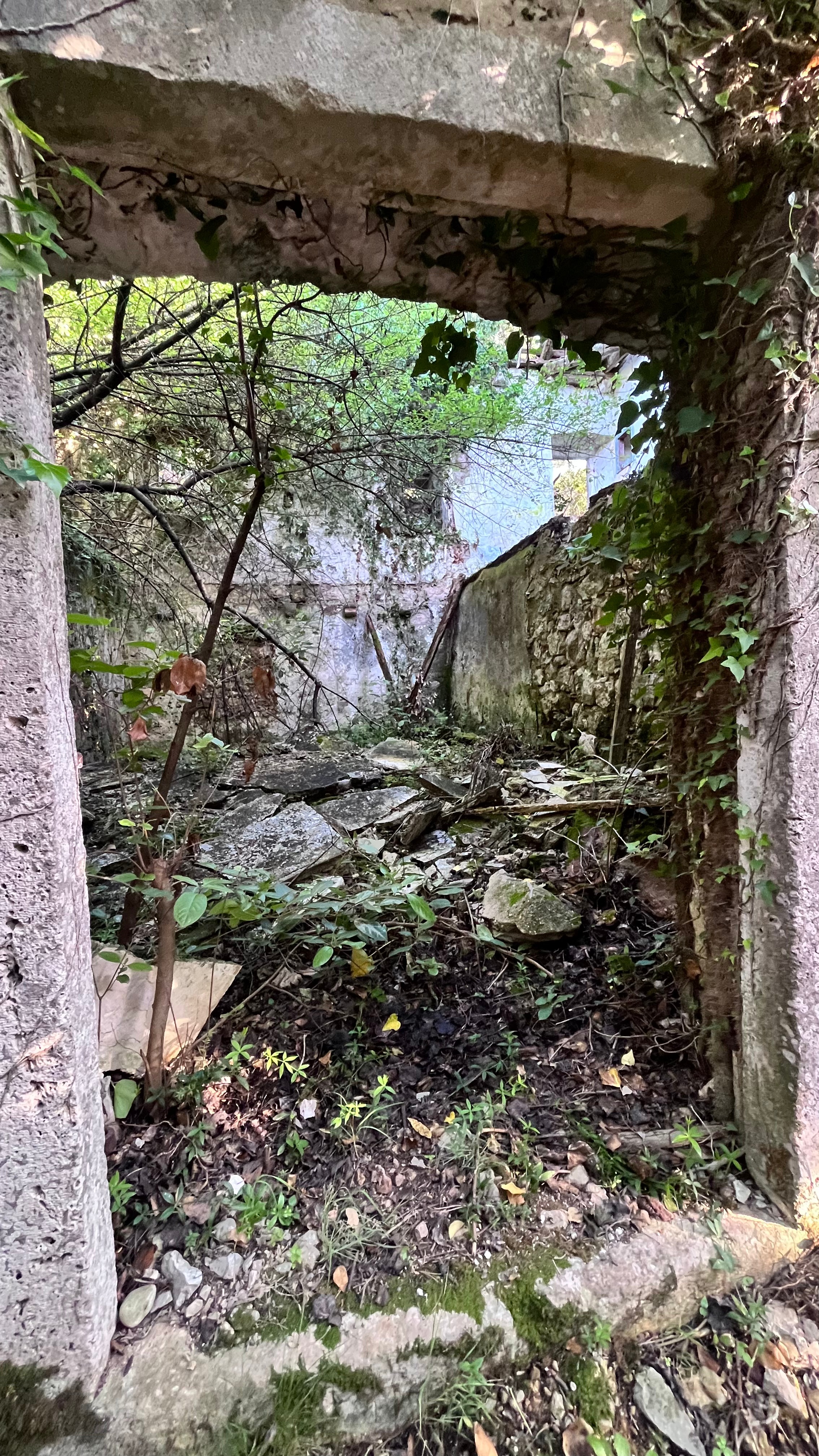
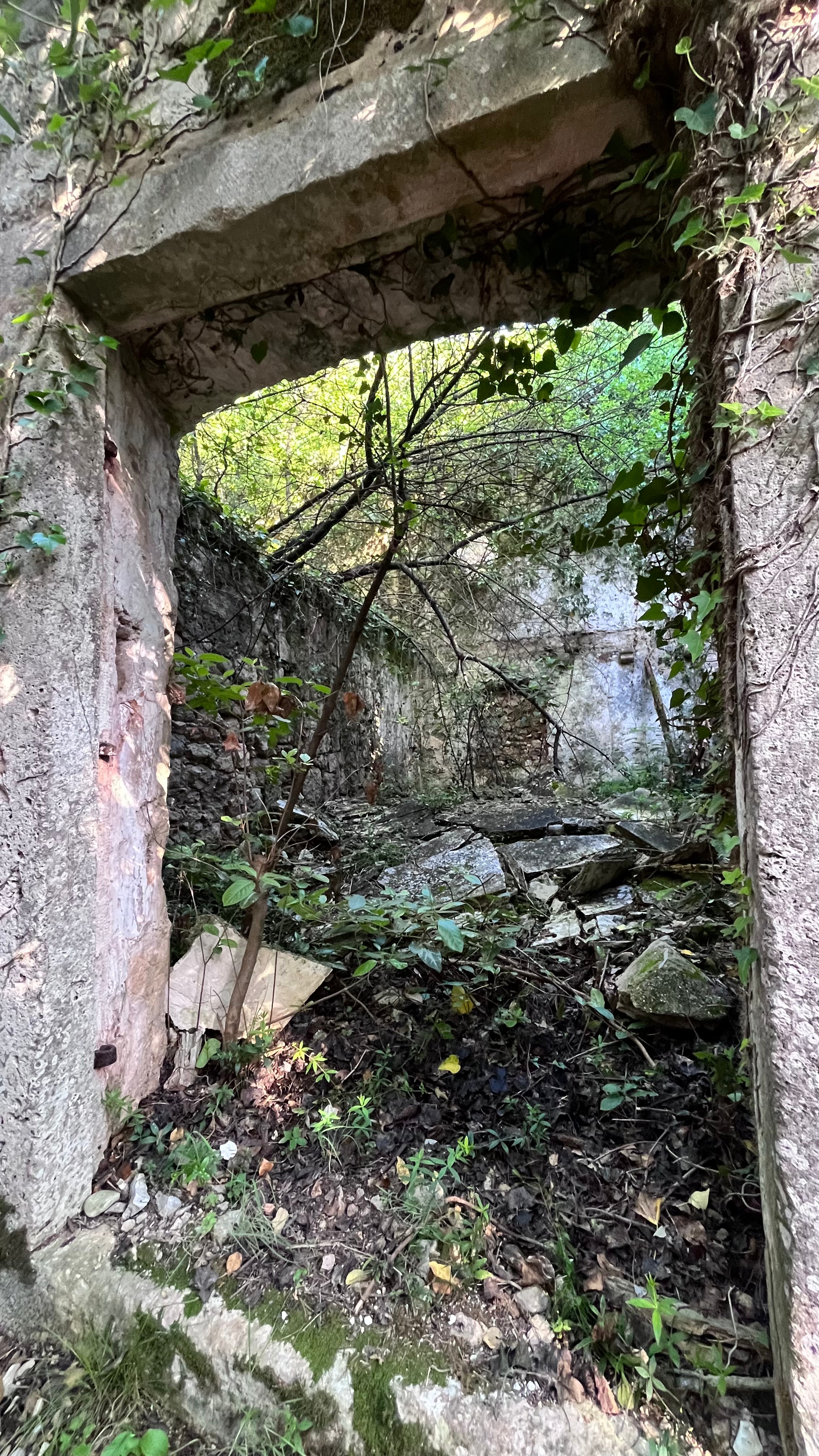
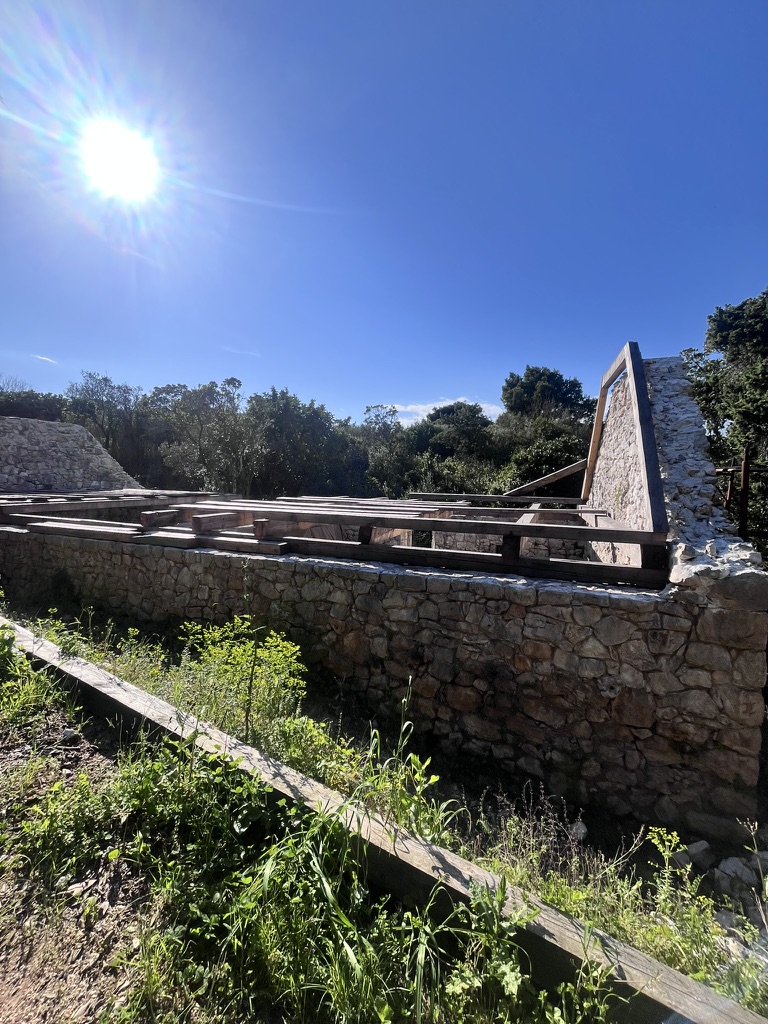

We routinely stumble on ruins of old nunneries, monasteries, and working churches with 925 AD foundation stones. The lived-in area of the island has contracted significantly, but the evidence of both the recent and distant past covers every square inch.
The result is more untended forests to roam around where you are apt to stumble on the ruin of a home from hundreds of years ago.
I should clarify – this *stumbling* that I mention is not actually a surprise happening upon. Natalia, Josko, and every other person on this island knows every twist, turn, twig, tree stump and secret passage (see point 4, above). Even after only a month, I feel pretty confident in the general grid, and would surely develop the same muscle memory over time. So when Natalia says “let’s take a quick diversion” and then we *stumble* on an old WWI bunker, or ramparts that were built to protect from pirate attacks.. it’s intentional.. she knows where she’s taking me.
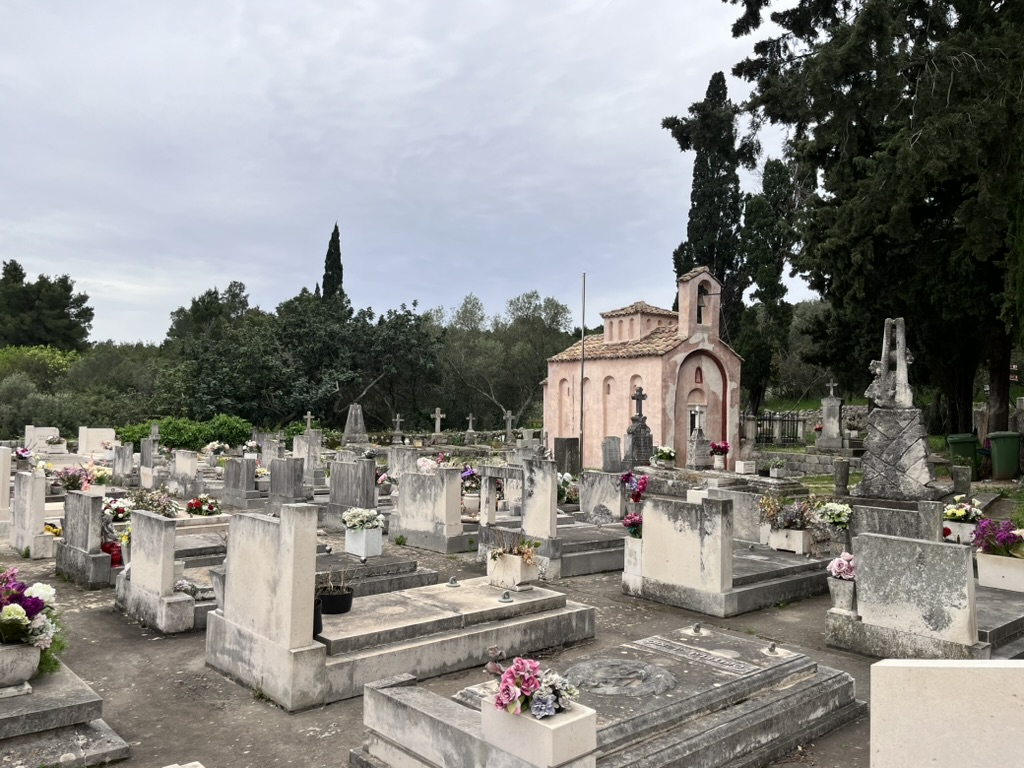
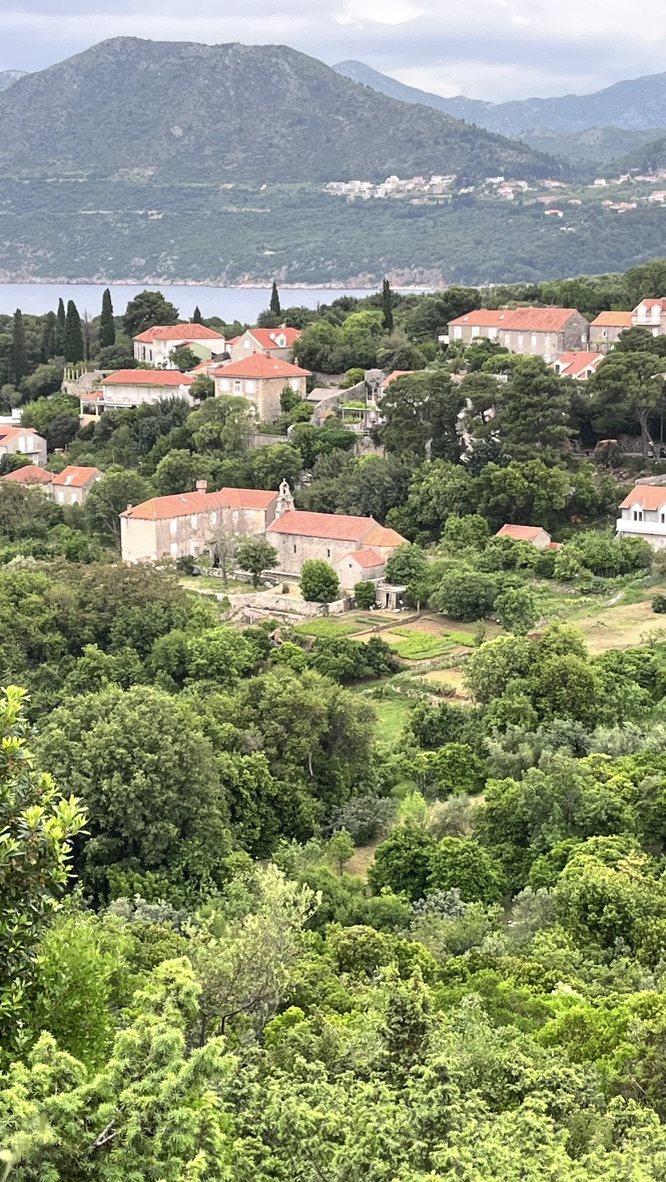
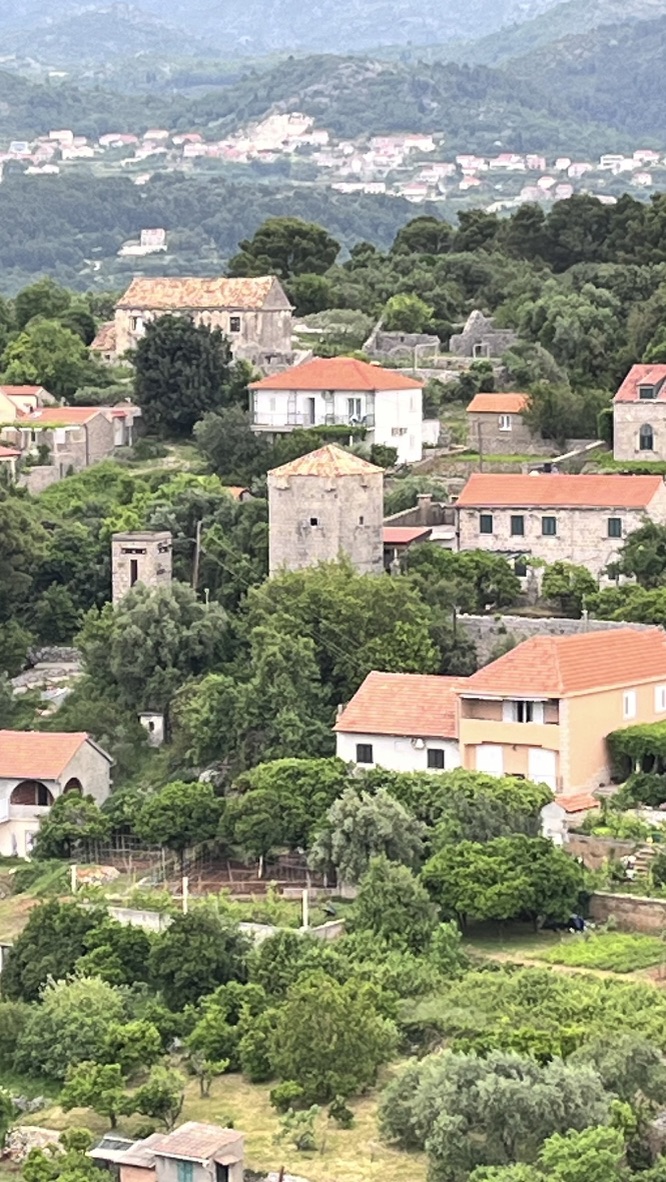


The churches and bell tower are literally 1000 years old; the bottom two pictures are bunkers and ramparts. Think about how many conflicts and wars and invasions Europeans have lived through… these have been repurposed and rebuilt for hundreds of years – from pirate raids to the most recent war in the 90s.
So there you have it
Kolocep’s vibes are immaculate. Thank you for bearing with me.. I haven’t even started talking about the water, which until this weekend I had no direct experience with, or the different places the paths can take me. Needless to say, I have no trouble getting my steps in here – and I think my phone thinks there’s a glicth.


 The Hannahlogues
Leave a comment